
Cybersecurity has quietly crossed a line in private equity. What was once treated as a technical hygiene issue has become a direct driver of value creation, value erosion, and deal confidence. A single breach or security gap at a portfolio company can erode equity value or even derail an exit. According to this article from Russell Reynolds, 72% of private equity firms across the US and Europe reported a serious cyber incident at one of their portfolio companies in the past three years, with an average cost of $3.4 million per incident. In addition, we have all seen the recent cyber breaches in the UK and the associated news coverage on the impact. Over the past year alone, incidents at organisations such as Jaguar Land Rover, Marks & Spencer, and the Co-op have resulted in disruption measured not in days, but in months, and financial impact measured in hundreds of millions and, in some estimates, billions.
- 72%
- PE firms reported cyber incidents
- $3.4M
- Average cost per incident
- Months
- Of operational and supply chain impact
Cyber incidents no longer sit neatly in the IT column. They affect revenue, operating continuity, brand trust, regulatory exposure, management focus, and ultimately valuation.
The lesson for private equity is clear. In practical terms, cyber risk has become financial risk.
The uncomfortable reality behind the headlines
When cyber incidents make the news, the focus often lands on the technical cause or the attackers involved. What matters far more to investors is the downstream impact.

In Jaguar Land Rover's case, the incident reportedly caused prolonged production disruption across multiple sites and suppliers. Analysts and industry commentators have pointed to operational losses accumulating week by week, with knock-on effects across the supply chain. The issue was not just data loss, but the inability to operate at scale.
Marks & Spencer disclosed significant direct remediation and recovery costs following its incident, alongside wider operational disruption. For a consumer-facing business, the reputational impact and management distraction were just as material as the technical recovery itself.
The Co-op's experience highlighted another recurring theme: how cyber incidents affect member trust, availability of core services, and confidence in leadership. Once again, the cost was not limited to incident response. It extended into lost revenue, prolonged remediation, and long-term brand damage.
Where cyber risk really shows up in the PE lifecycle
The most sophisticated firms no longer ask whether cyber matters. They ask where it matters most.
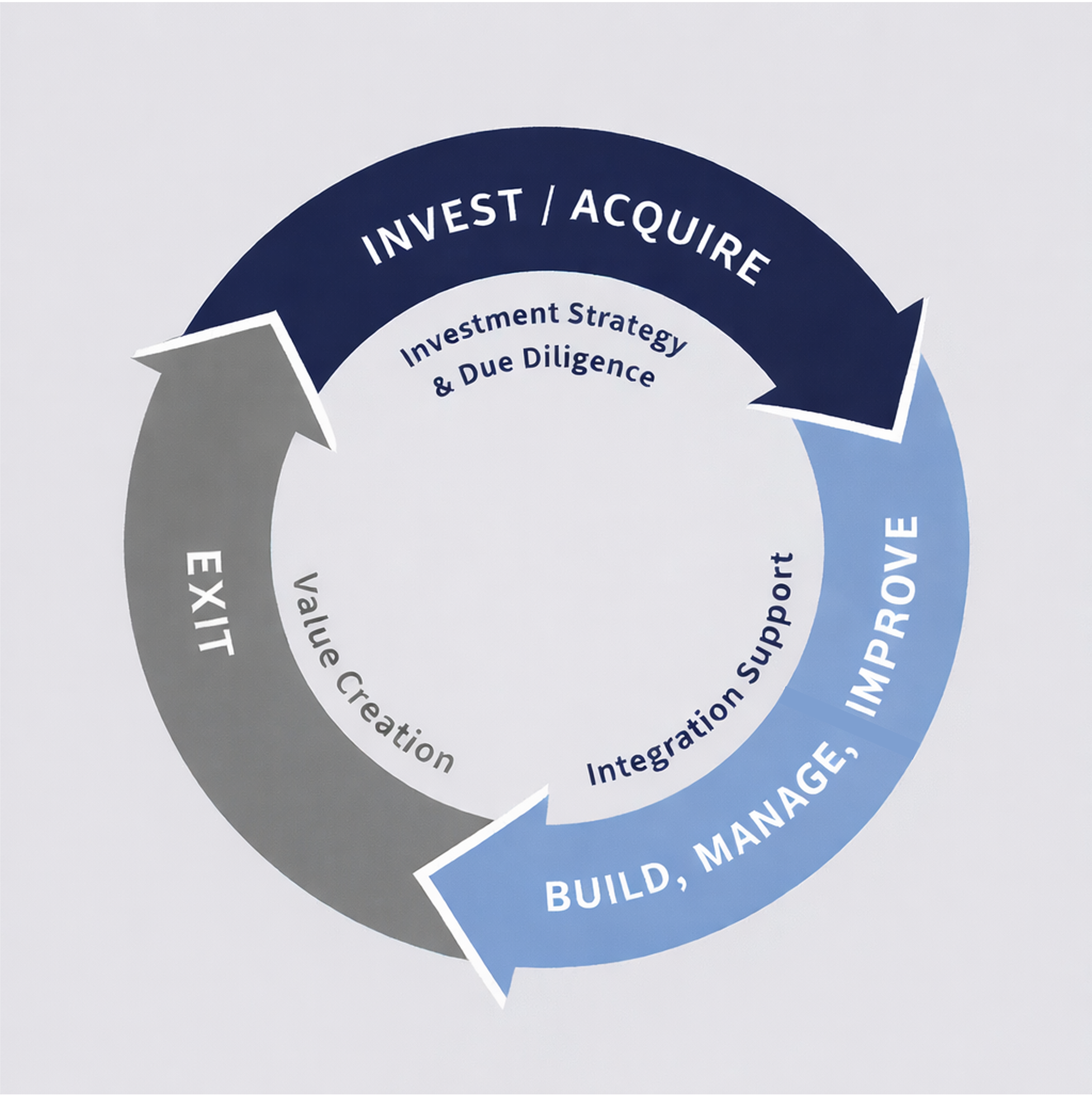
Invest / Acquire
Target Identification & Screening
Cyber risk should inform target selection before the LOI is signed.
- Does this target's cyber maturity align with our investment thesis?
- Are there latent risks that could derail value creation?
- Understanding security posture early reveals hidden liabilities
Due Diligence
Cyber risk translates directly into pricing and deal structure—it's a pricing input, not a pass/fail check.
- What are we inheriting, how exposed are we, and what will it cost to fix?
- Weak controls = real remediation cost and execution risk
- Quantify findings to negotiate better terms or adjust purchase price
Deal Structuring
Build cyber risk into escrow provisions, indemnities, and R&W insurance.
- Reserve capital for post-close stabilisation if needed
- Structure remediation obligations into transaction agreements
Closing & Day One
Cyber risk peaks immediately post-acquisition—systems change, people are distracted, attackers know it.
- Include cyber stabilisation in your 100-day plan
- Confirm access controls, validate backups, ensure incident readiness
- Failure to stabilise = crises before value creation begins

Build, Manage, Enhance
Value Creation through Operations Optimization
During the hold period (3-7 years), cybersecurity becomes an operational resilience issue, not just an IT problem.
- Ransomware, supplier compromise, and regulatory scrutiny disrupt sales cycles
- Security incidents delay transformations and absorb leadership attention
- Top performers treat cyber as operational excellence, not compliance
Embed Cyber into Governance
Cybersecurity is a value-creation lever that must be integrated throughout the hold period.
- Ensure portfolio leadership understands exposure in business terms
- Develop internal capability or access fractional CISO support
- Treat security as a growth enabler, not a cost centre
Cybersecurity is not a one-time fix. It's a value-creation lever that must be integrated into operational transformation throughout the hold period.
Exit Planning
Exit Preparation & Execution
Whether trade sale, secondary buyout, or IPO, cyber risk becomes highly visible at exit.
- Buyers expect clear evidence of cyber maturity, incident history, governance
- A late-stage breach can stall transactions or materially impact valuation
- Cybersecurity becomes a valuation protection exercise, not a cost discussion
Sell-Side Cyber Diligence
Identify issues ahead of buyers, set the narrative, and negotiate from strength.
- Establish cybersecurity quality of operations (like quality of earnings for EBITDA)
- Demonstrate cyber risk is understood, managed, and not a hidden liability
- In competitive processes, this can differentiate a clean exit from a discounted one
Boards, regulators, and buyers are paying closer attention
Alongside the growing financial impact, expectations around cyber governance have risen sharply. Boards are now expected to understand cyber risk in business terms, not technical language. Regulators are demanding clearer accountability. Buyers are asking harder questions, earlier in the process.

Frameworks such as the World Economic Forum's principles on board governance of cyber risk reflect this shift. Cybersecurity is no longer viewed as a defensive IT function, but as a strategic business enabler that underpins resilience, growth, and trust.
For private equity firms, this means portfolio companies need more than tools and policies. They need leadership alignment, clear ownership, and decision-making that connects cyber posture directly to business outcomes.
Why a different kind of cyber partner is needed
Private equity firms increasingly need a partner who understands transactions, operating models, and board dynamics, not just controls and frameworks.
One of the biggest mistakes I see is treating cybersecurity as a specialist workstream that can be bolted on. In reality, cyber risk cuts across investment, operations, finance, legal, and leadership.
Private equity firms increasingly need a partner who understands transactions, operating models, and board dynamics, not just controls and frameworks. Someone who can sit between capital, leadership, and execution, and focus on the moments that matter most: diligence, post-deal stabilisation, transformation, incidents, and exit preparation.
This is not about over-engineering security or creating friction. It is about making pragmatic decisions that protect value and enable growth.
How Cybershield Partners helps
At Cybershield Partners, we work with private equity firms and portfolio companies as an independent operating partner, not a traditional consultant.
We support the full investment lifecycle, from pre-deal cyber risk assessment and valuation input, through post-acquisition stabilisation, portfolio-wide oversight, CISO coaching, and exit readiness. Our focus is always on outcomes: protecting value, reducing uncertainty, and ensuring cybersecurity strengthens, rather than undermines, the investment thesis.
If you want to discuss how cyber risk is affecting your deals or portfolio today, let's talk.